
If someone is seriously ill or injured, call 999. For urgent but not life-threatening problems, call 111 or use NHS 111 online. This page is general information and does not replace first aid training.
Why this matters more in a crisis
On a normal day, an ambulance is usually on its way within minutes. In a major storm, flood or widespread incident, the same 999 call may take much longer to answer with a vehicle: roads are blocked, crews are stretched and hospitals are busy. Power cuts add their own dangers: falls in the dark, burns from candles and stoves, cold, and carbon monoxide.
The good news is that the skills that save the most lives are simple. The British Red Cross teaches them in a few steps each, free online, and its first aid pages have short videos. Here is a summary of the most important.
Unresponsive and not breathing
- Check if they respond: call their name and gently shake their shoulders. Shout for help.
- Tilt their head back and check whether they are breathing: look, listen and feel.
- If they are not breathing, call 999 (or get someone else to).
- Push firmly in the middle of the chest, hard and fast, at a rate of about two pushes a second. Keep going until help arrives. If someone else can help, swap every minute or two.
- If a defibrillator (AED) is available, send someone for it. It gives spoken instructions when you open it.
Noisy, irregular or gasping breathing in someone who is unresponsive is usually a sign their heart is not working properly. Start chest compressions. Do not worry about hurting them: without compressions, their chance of survival is much lower.
Unresponsive but breathing
Put them in the recovery position: on their side, with their head tilted back so their airway stays open and anything in their mouth can drain out. Call 999 and keep checking their breathing until help arrives. If they stop breathing, start chest compressions. The Red Cross video shows the recovery position in under a minute.
Heavy bleeding
- Press firmly on the wound with whatever is available: a dressing, cloth, towel or clothing.
- Call 999, or get someone else to.
- Keep pressing until help arrives. If blood soaks through, put another pad on top and keep pressing.
- If something is stuck in the wound, do not pull it out. Press around it.
Burns and scalds
- Cool the burn under cold running water for at least 20 minutes. If running water is off, the Red Cross says you can use other cold liquids, such as milk or soft drinks.
- Remove clothing or jewellery near the burn, but not anything stuck to it.
- Once cooled, cover it loosely with cling film or a clean plastic bag.
- Call 999 for serious burns. Always get medical advice for a baby or child.
Never put butter, cream, toothpaste or ice on a burn. Power cuts raise the risk of burns, from candles, camping stoves and hot water bottles filled from a kettle.
Cold: hypothermia
A cold house in a long winter power cut is dangerous for older people and babies. Signs include shivering, pale cold skin, slurred speech, confusion and drowsiness. Hypothermia is a medical emergency: call 999. While you wait, move them somewhere warmer, remove wet clothes, wrap them in blankets with their head covered, and give a warm, non-alcoholic drink if they are fully awake. Do not use a hot bath or rub their limbs. See our cold weather guide and the power cut warmth guide.
Carbon monoxide
Headache, dizziness, nausea, tiredness and confusion, especially if several people in the house feel the same and it gets better when they go outside, can mean carbon monoxide poisoning. Get everyone into fresh air, turn off any fuel-burning appliance if it is safe, and call 999 or the gas emergency line. Fit a battery CO alarm: see CO alarms.
Your home first aid kit
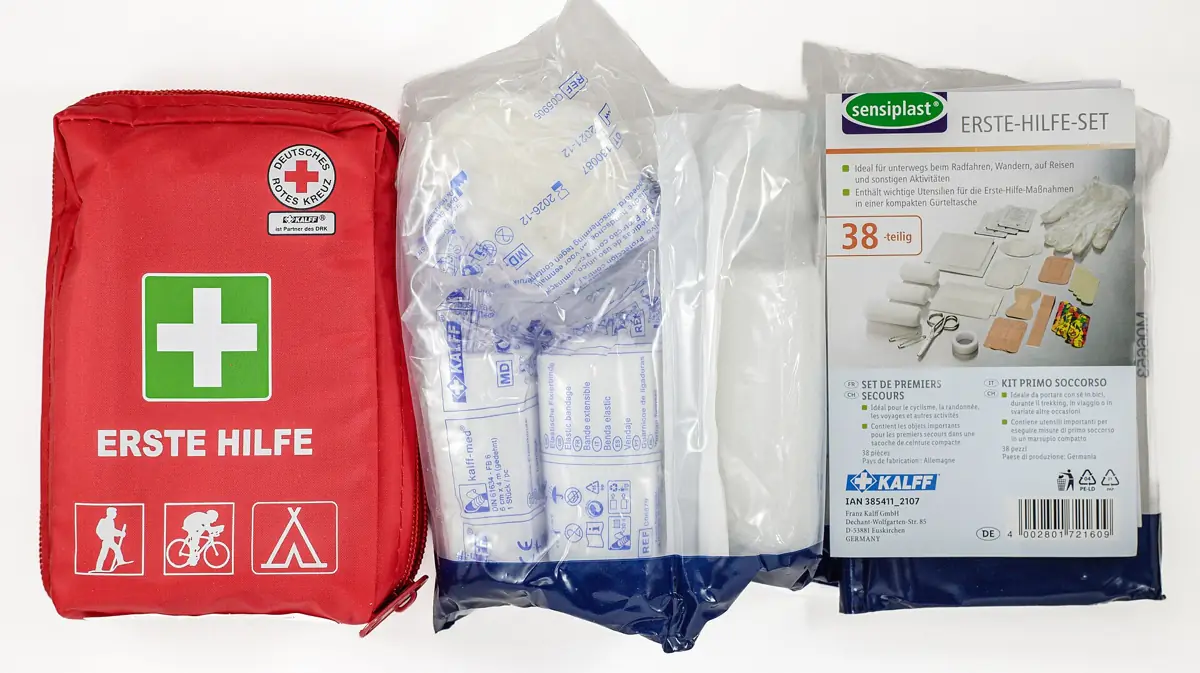
A ready-made kit from a pharmacy or supermarket is a good start. Then add what your household actually needs: regular medicines, antihistamines, painkillers suitable for children, a thermometer, cling film for burns and a foil blanket. Keep it somewhere everyone knows, check it twice a year and replace what you use. Pack a smaller version in your grab bag.
Medicines: order repeat prescriptions in good time, especially before winter and bank holidays. Ask your pharmacist or GP about keeping a small buffer. Do not stockpile prescription medicines without advice.
Learn it properly
Reading is no substitute for practice. The British Red Cross and St John Ambulance run short courses across the UK, and both have free online advice and apps. One evening of training is the most valuable thing on any prepping list.
Kit for this guide
A household first aid kit. Research-based: a type of kit, not a product we have tested. Ask a pharmacist what suits your household.
- Ready-made first aid kit with sterile dressings, bandages and plasters Research-based
- Disposable gloves Research-based
- Cling film (for burns, after cooling) Research-based
- Painkillers and antihistamines Research-based
- Thermometer Research-based
- Foil blanket Research-based
- A few days’ buffer of regular medicines Research-based
- Written list of medicines, doses and allergies Research-based
Official sources we used
- Learn first aid (British Red Cross)
- Unresponsive and not breathing (British Red Cross)
- Unresponsive and breathing (British Red Cross)
- Bleeding heavily (British Red Cross)
- Burns (British Red Cross)
- First aid (NHS)
- First aid advice (St John Ambulance)